Abstract: Case Portrait and Core Challenges
This case focuses on a manufacturing enterprise with a strong international background that was once a true “hidden champion” in its sector. The company has operated in China for over 20 years. In its early years, performance was outstanding: its flagship plant in East China was regarded as a benchmark within the global network—consistently leading worldwide in product quality, customer satisfaction, and operational efficiency, and topping the KPI rankings for many consecutive years.
Then, a series of shocks followed its period of glory. With the launch of a new plant, the company redeployed a large number of top performers to the new site. The concentrated transfer of key managerial, technical, and frontline talent immediately weakened the core capability of the original plant. Yet head office did not lower expectations for its business results or new product development targets. The plant found itself in a squeeze: no manpower allocated, but full pressure on productiveness. At the same time, new municipal environmental regulations were implemented, leading to closure of the new site within five years.
The original leadership team had long seen themselves as “number one in the industry,” but now had to confront the reality:
• Customer complaints surged and quality of products went down
• Three core KPIs flashed red; only the “safety” indicator barely held
• Low accountability and collaboration between departments were weak
• Leadership turnover was high; the new plant head had yet to build trust or authority
• Meetings felt heavy and stifled; communication broke down and morale declined
• Employees were deeply uncertain about the future—unsure whether to “just get through this period” or “commit for the long haul”
At this crossroads, the company made a bold decision: instead of simply cutting costs or reshuffling the org chart, they chose to intervene the team from its base—by introducing team coaching.
Our Approach: A Five‑Step Journey from Chaos to Renewal
The team coaching engagement spanned nearly ten months. Using a systemic intervention model, it moved step by step from diagnosis to facilitation, from reflection to transformation.
1. Team Diagnosis: Seeing the Team Clearly
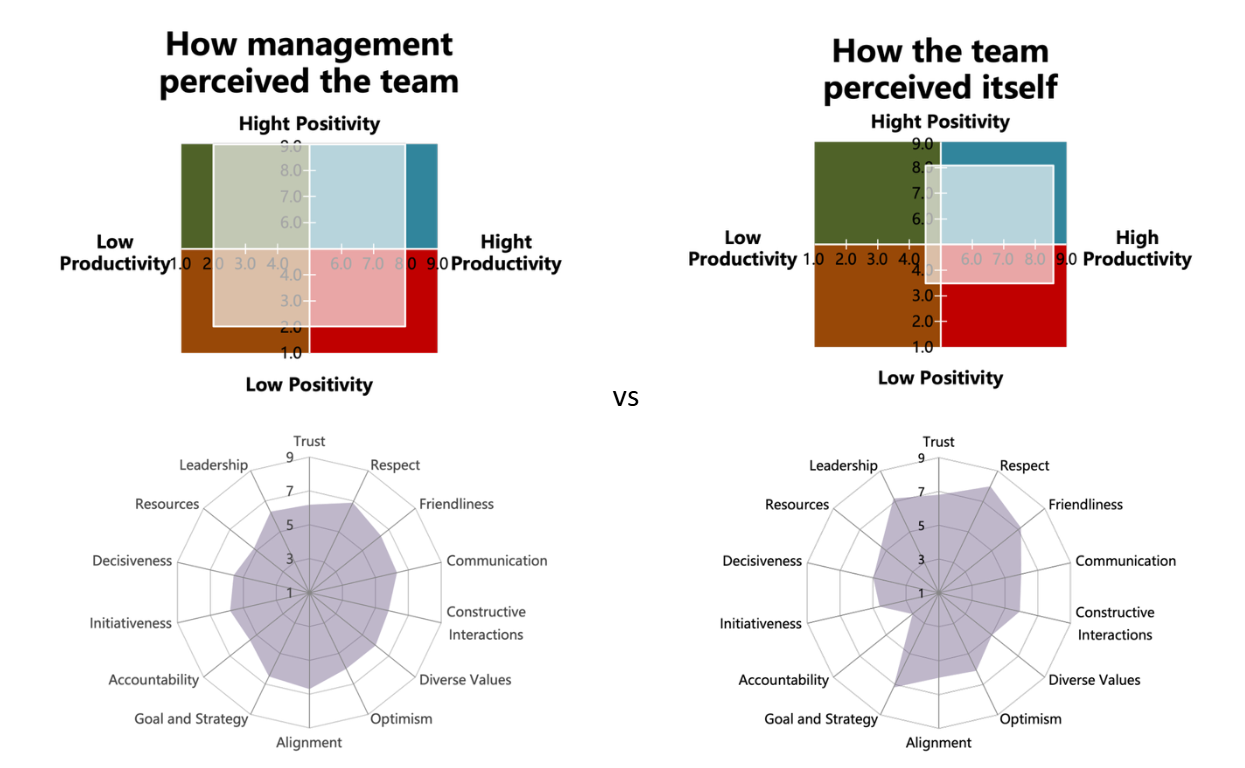
At project launch, all members of the leadership team completed the TDA (Team Diagnostic Assessment). The assessment did more than reflecting the current levels of Productivity and Positivity; it also revealed the team’s true profile across critical dimensions such as accountability, trust, collaboration, and effective communication. It made visible the gap between how management perceived the team and how employees actually experienced it.
The TDA acted as a mirror in which each leader had to face their own role, assumptions, and blind spots about collaboration.
2. Kick‑off Workshop: Building Shared Understanding, Co‑creating a Vision
Based on the diagnostic results, the team engaged in a two‑day, in‑person kick‑off workshop. Using data, dialogue, and experiential facilitation, we helped the team break through prior divisions and guided them into genuine conversation and shared understanding:
• The new plant head gradually established influence, shifting from “the one who gets things done” to “the one who leads the team”
• In plenary dialogue, team members openly explored two core questions:
◦ “What is our true value?”
◦ “Even if this plant is one day shut down, what legacy do we want to leave behind?”
At this stage, an emergent sense of mission began to surface.
The workshop also surfaced the team’s real strategic questions:
• How do we relate to a future that is full of uncertainty?
• How can we rebuild cross‑functional trust and collaboration?
• What roles and responsibilities should the leadership team truly own?
The kick‑off did more than break the silence; it led managers to make concrete commitments and action plans.
In one pivotal moment, the new plant head said candidly:
“Some of you may be thinking that the company is already losing money—why are we doing coaching now?”
“To the management, this is not a training—this is the last investment in this team.”
3. Follow‑up Workshops: Ongoing Dialogue, Ongoing Momentum
Following the kick‑off, the design included four half‑day follow‑up workshops, each structured around a key theme:
• Constructive Interaction Workshop
Introducing non‑violent communication to break the “silence → blow‑up” cycle and foster cross‑functional collaboration.
• Accountability Workshop
Using an “Accountability Triangle” to strengthen proactivity and move from “passive execution” to “self‑driven ownership.”
• New Perspectives Workshop
Helping the team step out of habitual thinking and view issues from a broader systemic angle, clarifying direction in a complex context
• Values & Meaning Workshop
Supporting members to reconnect with the purpose of their work and find “reasons to persist” amid uncertainty. In a simulated “plant closure” exercise, participants were asked:
“If you knew this were your last six months here, what story would you want to leave behind?”
This not only evoked powerful collective emotion, but also awakened a sense of responsibility that went beyond the remaining life of the site itself.
Each workshop revolved around real business issues. Each coaching conversation went straight to the core of how the team was operating.
4. Follow‑up Workshops: Ongoing Dialogue, Ongoing Momentum
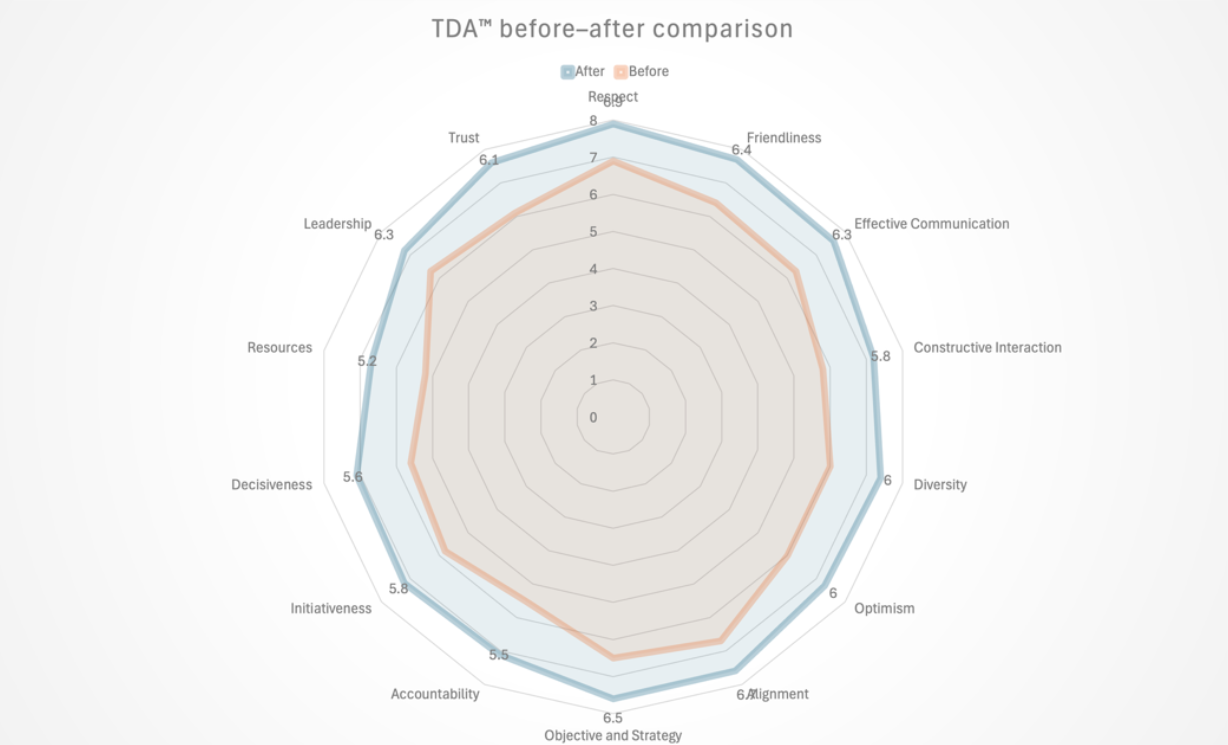
At the end of the project, the team completed a second TDA, supplemented by qualitative interviews to review changes over time. The results showed significant improvement across multiple dimensions: